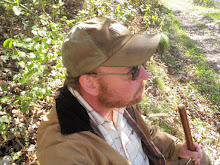
“You must really like to eat fish,” the friend of a friend says to me while sipping her latte.
“Um, well, actually I release most of the fish I catch,” I mumble, aware where this is inevitably going to end up.
“So, you like to fish, and you admit you like to eat fish, but instead you release them?”
“Well, see, it is all about nature, and beauty, environmental stewardship, appreciation of the fish and the river… See, fly-fishing is more than just fishing…”
Really, though, when it comes down to it, I reflect, it is just a simple game with rules that a four-year-old could grasp: Go down to lake or river with rod and reel. Catch fish. Repeat.
Being romantics, we always want to make more out of it. Take a simple essence and surround it with volumes of philosophy.
Make it into some sort of metaphysical and existential reflection and journey. Make it into a metaphor, and find life-lessons in it. Sit by the river pondering Camus. Assigning anthropomorphic qualities to things we see around us. Our flies are art, not craft we argue to ourselves, as if just accused anonymously by an upstart and impudent thrush. We’re not just fishing see… we are, well, experiencing some sort of primal harmony. “It’s all poetry,” we murmur out loud, even if the hypocrisy peeks its irritating head through a tiny doorway in our brain, reminding us that the last time we attempted to read Frost, we fell asleep.
It just has to be more than a simple game of cat and mouse. We refuse any assertion that at times it can be quite easy. “Takes years and skill,” we argue to the trees while raising fish after fish with a fly that the carefully tied hackle fell off of on the first cast.
We have been caught by family members while lying in the filled bathtub with scuba gear, congratulating ourselves on the latest revelation or innovation in fly design. We have been admonished and punished by angry spouses when our latest attempts at dying hackle stained the sink a very interesting shade of green.
‘Normal or mundane’ folks refer to them as bugs, but we know better. They are Ephemerella subvaria. It makes a difference we reflect… Appreciation and knowledge and such.
There was once a time when we contemplated homicide as a careless Aunt referred to our cane fly rod as a “Fishing pole.”
We don’t just take a drink from the river, we sip of the essence of life, forgetting while we do so, that the last time we did this we ended up with the runs for a week.
What other kind of sport could so inspire, that we could be found late upon a cold winter morning, seated in front of the fireplace in the study, dressed only in a robe and our underwear, surrounded by tackle and fly-boxes, dreaming dreams of spring.
I once read somewhere that a newlywed bride told her friend, “My husband does not drink, smoke, or chase women, instead, he fly-fishes.”
Several years later, she admitted to the same friend that if it were up to her, she wished he did a few of those other things, and a bit less fishing.
“It’s complicated,” I try to explain to the friend of a friend; “It’s sublime.” Hearing those words from my mouth with the clarity of an out of body experience, I smile about how I am going to explain why it is ‘sublime’ to match wits with a creature with a brain the size of a match-head, attempt to fool it with a bit of old string and some smelly fur, and end up coming up short most of the time.
“Perhaps it is a journey in humility,” I reason out loud, remembering when arrogance kept us from talking to that guy with the spinning rod that was out-fishing us ten to one. Pride before the fall? Arrogance before humility, or humbleness only because of prior arrogance… More philosophy.
What other sport would have us attempt, via some hidden and unknown rosetta stone, to decipher and make sense of the many ill-written books on fly-fishing? Some being tomes of astounding tediousness and practically unreadable. What other sport would have us chuckle with the fine author Nick Lyons, as everything possible goes wrong and he falls in the river? Perhaps it is because we have been there ourselves. We may reflect back to the time when, on the subject of beauty and fly-casting, we attempted, in a local park, to show our spouse the inherent ballet in a properly made loop, only to have a seagull eat the piece of yarn we were using as a fly, and after taking out all the line, tangle it forever in a large oak tree.
“It’s complicated…” I mumble through current muffin crumbs, watching the departing back of the friend of a friend, and looking down at the spilled coffee, and the single word traced with it on the table: “Crazy.”
After much reflection, I have come to completely agree.
Showing posts with label Essay. Show all posts
Showing posts with label Essay. Show all posts
Tuesday, April 27, 2010

Tuesday, February 16, 2010
A Philosophical Look at Fly Fishing
A Philosophical Look at Fly Fishing;
Copyright 2009 Erik F. Helm
Awhile ago, while watching a spin fisherman walk far too quickly down a pretty stretch of my local smallmouth bass river, throwing casts in every direction and hauling in the occasional fish by cartwheeling it back to him, I began a slow meditation on why I flyfish. Just what is it about flyfishing that seems to captivate my soul? Why have I given up all other kinds of sport fishing? I had a lot of ideas, most overlapping and difficult to categorize. Some were more feelings than ideas. I feared it would like trying to describe fine music with mere words. In my thinking I had began to fuss and over-analyze the sport, when near dusk I made a beautiful cast, sending a pretty loop of line across the river and delivering a popper under the branches of a fallen willow, which in turn was engulfed by a beautiful and strong smallmouth bass. It was perfection. “Aha” I exclaimed aloud, “Thank you for reminding me.” Moments like this are epiphanies. Therefore, with all humility, I give you my take on flyfishing.
A good point of departure is to examine what the outside world envisions when it imagines flyfishing. If one reads any mainstream news or magazine article over the years regarding flyfishing, they all have common themes. Flyfishing seems remote and mystic, practiced by older gentlemen wise to the way of fish and river. Gentlemen who we can imagine engrossed in a good book at the hearthside and enjoying a pipe. They might be a bit misanthropic, preferring the company of a good dog and an eight-inch brookie to that of common society. The fly angler often is depicted as a bit tweedy, like a college philosophy professor with addition of rod and creel.
Flyfishing is depicted as different and elevated beyond the other forms of sport fishing. Fly anglers are depicted as serious and traditional.
The sporting Tradition:
So, letting the magazine images and portrayals guide us, let’s go back in time. Flyfishing came to America via Europe; specifically England. Flyfishing was a diversion and sport of the leisure class. Only they could afford the time and effort needed to catch a fish on horsehair lines and small feathered creations. The common workingman would never have enough time for pleasantries. Common men fished with bait and nets, while the upper classes were the practitioners of flyfishing; thus, we also see the origins of the snobbery effect. The sporting tradition in England demanded that the animal or fish supposedly be given a sporting chance. Fly anglers dressed in the finest country clothing, took pride in the aesthetics of their equipment, and fished in beautiful places for beautiful fish. Not a lot changed in the American inheritance and adoption of flyfishing. The dryfly was still considered the only way, and although the chalk streams gave way to the Catskills, the trout still lived in beautiful places, and the persons chasing them with the fly rod were still the leisure classes. Anglers still dressed in their Sunday best, and flyfishing was still considered an elevated way of sporting against the fishes. Modern flyfishers are not all members of the leisure class. We come from diverse backgrounds. We no longer wear ties and collars, and have often traded bamboo for graphite, but we are still bound together by a tradition of a fish caught in a sporting way. Given this background, let’s look at some of the inherent qualities and themes in this sporting tradition.
A quiet sport:
Above all, flyfishing is a quiet sport practiced in beautiful natural surroundings. It is a sport practiced alone, where one can hear the murmur of the brook and the wind whistling through the trees. Gone are the sounds of the city and civilization. Gone are the screaming children and barking dogs. Gone are the roaring engines and sirens; gone are the worries and stress. Fly anglers are apt to stop fishing at some point, and simply sit and watch an eagle or a sunset. Most flyfishing is done while wading, without boats. When boats are used, often they are canoes or drift boats and non-motorized or only equipped with a motor sufficient to get them out of trouble. Many fly anglers are so quiet that you would never see them if their reels didn’t click. They silently glide into the water and disappear into the mist. The rhythm of casting is slow and quiet too, as is the way the fly enters the water. Quietness is important to us as it allows us to think. Remember, music is the space between the notes.
Nature and beautiful places:
Trout live in beautiful places, as do other fish we fly anglers pursue. Nature is simplicity and a force. We try to capture essences of nature and the natural world in art and music, the smells and sounds in poetry. Nature and its language and silence are part of each of us. It is where we came from. To practice a quiet sport among such beautiful and diverse surroundings as mountain streams, big freestone rivers, and northern forest brooks is a privilege and our worship at our temple. Nature’s spiritualism is a large part of flyfishing. At the end of the day, we are as likely to lock into memory the moment the sun burned off the mists over the river at dawn, as the fish we caught. This attention to the aesthetic qualities of nature leads us to care about our treasured places, and to become concerned with the forces that threaten them. Few true fly anglers are not closet tree-huggers, if not outright members of conservation organizations. We care because we love, and we love because of beauty. We are connected to the natural world by the footprints we leave and the loops we make.
Involvement:
More than any other kind of sport fishing, fly-fishing is connected and involved with the act of fishing. Fly anglers have to make delicate casts, read water, and manage line. We strip in line by hand in order to prevent drag or give a streamer motion. We don’t just turn a crank. Because of the inherent difficulty of flyfishing, we have to think. We don’t have sonar or radar detectors to tell us exactly where the fish are, we have to explore with our feet and use our minds to defeat the fish, and bring its jeweled form to hand. To me, involvement is essential to the experience. Trolling bores me, as does watching a bobber. Having to present my fly to the fish, whether that is a dryfly, popper or swung salmon fly, involves me with life’s intricacies, struggles, and patterns. That involvement in turn combined with curiosity opens a door to the natural world, and as we study it, we don’t just become better anglers, we become more aware. In essence, we flyfishermen don’t drink beer while aimlessly chucking lures, but instead may savor a dram of single-malt after having discovered and matched a particularly mysterious hatch, or having made the perfect cast. We are involved, and appreciate the ability to make discoveries and learn. We want to be more involved in actually catching the fish. We want to say “I figured it out, made the cast, and caught the fish.” We actually want to be the main participant in the little mental and physical chase between ourselves and the fish, not let technology or someone else do it for us. This is the opposite of fishing by pulling plugs, or charter fishing with deep running dodgers and flies. The customer or fisherman here is not involved at all, merely being the last link on the chain between the fish and a whole lot of knowledge of the guide or captain. After all, the guide has rowed the boat pulling the plugs at just the right speed and in just the right place to take a fish, and the captain has the years of knowledge and sonar to locate fish. They are really fishing, not their customers. The customer merely reels in the fish for the glory shot and fish fry.
Simplicity:
Flyfishing at its essence is a simple sport; a single long rod and single hook used in pursuit of our spiritual quarry. We carry a box of flies that can fit into a pocket, not a large tackle box that weighs forty pounds. Although our rods can be complicated in taper, construction and refined use, they at essence are simply the principle of the willow branch in action; always giving and bending but never letting go, thus letting the fish tire itself out. Our flies are colors of natural furs and feathers and their imitations wrapped on an artists blank canvas of a single hook. Rarely do we need complicated rigging or weight. We need no sonar devices. Just the rod, line, and fly.
Appreciation:
I would make the argument that we who flyfish appreciate our quarry more than other sport fishers. It lies in the inherent difficulties and demands of the sport. Most of us pass through several phases of angling. First, we want to merely catch a fish. Then we want to catch the most fish. After that, we want to catch the biggest fish. Finally, we progress in our angling journey to a point where we are satisfied with just being able to fish. We come to enjoy the settings we fish in. We are happy with a small fish. We are happy with many fish. We are just happy to fish. We appreciate the privilege of fishing itself. Numbers are not important any more. We no longer have anything to prove.
In flyfishing, we have to stalk our prey. Whether a steelhead in a big roaring river, or a small bejeweled cutthroat in a mountain stream, our sport demands that we work for our quarry. That work and time spent on the river builds appreciation. I have walked off the water after catching a single memorable fish to eat blackberries or simply to soak in the moment. Some fishermen always have to catch fish. It becomes a game of numbers. When we turn a fish into a number, we have lost a piece of our soul.
Flyfishing is a difficult sport. We have to learn to cast, to wade, and to read water. The limitations of our tackle connect us to the water like no other fishing. We have to think and learn; to evolve as fishermen. We take nothing for granted. The angling experience becomes more than just fishing. When we no longer have ‘bad’ days but merely ‘introspective’ days fishing, we have truly become appreciative of the river, the fish, and the angling experience.
Aesthetics:
In addition to the beauty of the places that we pursue our fish, the tackle we use has its own aesthetic qualities. A fly is a beautiful thing. From a well-tied mayfly dry, to a full-dress Atlantic salmon pattern, our flies are tributes to the fish we catch. We spend hours at the bench tying our creations, just to send them on their way into the river like an offering, with a hope that a connection will be made to a fish. We collect books on flies, and spend winter nights organizing them in boxes. They are small pieces of art. There is little to compare in a plastic lure or metal device. Bait is just bait.
In addition to the fly, our casting is elegant; a sort of airborne ballet. A loop of flyline gently unrolling over the water to quietly place a fly on the water is something to appreciate in itself. When I practice in the park or the river, people often stop to watch for a bit. Would that happen if I were throwing a crank-bait? I doubt it. Watching a good fly-caster can be like watching a gymnast and dancer all rolled into one.
Rods can be appreciated as art as well. A cane rod can be a treasure. With its specialized taper, hand wound guides and clear varnish, it lets us see the essence of a rod in its simplest but prettiest form. Even a well-made graphite rod can be a thing of beauty. Exotic wood inserts and reel seats can match with nickel-silver hardware to create a rod worthy of being photographed.
Many of our reels can be thought of as artistic creations too. Looking at a classic American s-curve handled trout reel with black sides such as a Bogdan or Vom Hoffe one cannot be unmoved. Then there are the old Hardy reels with their own legacies and traditions. Whole books have been dedicated to the art of fly tackle and flies, perhaps more than any other fishing sport.
All fine arts and crafts like these have to be used, and in the use of beautiful tackle in beautiful places, we may achieve a sort of aesthetic beauty ourselves.
Quiet, peaceful and alone:
Flyfishing is a sport performed alone. Even if you fish with a friend, you are both doing your separate thing. There is no team: no winner, and no loser. There is no competition except with yourself and your skill. In the end the experience is yours, the memories earned, the fish won fair to hand. Flyfishing can be a meditation; a reflection. Alone we pass through time and the river, ever learning. The mistakes are ours to make alone, and the victories ours alone to celebrate. Quietly we stalk the fish, at peace with the world, and wondering what happened to the worries of yesterday.
A lifetime of learning:
One man’s life is not enough time to learn everything there is to know about flyfishing. Indeed, flyfishing can be thought of as a lifetime journey. It is a sport of reflection and thinking: an intellectual sport. As we progress as anglers, so do we progress as people, growing wise with analogies to life and fishing. If we are ever bored, we can simply change gears. We can learn to cast a two-handed rod, fish in the ocean for stripers, return to the joy of youth by fishing for bluegill, or simply put the rod away, and read a passage of Roderick Haig-Brown. There is so much to do and learn. We have become curious as flyfishers. We ask “Why?” “What if I do this?” or “What about that?” then we spend time on the water exploring our own questions.
So, let us go back to that evening on the water when all this contemplation started. The other fisherman moved through the water fast because his equipment allowed him to. He threw his tube-jig three times as far as I could cast because he could. He walked through the best water while casting to empty shallow runs because he never needed to read water. In twenty minutes, he was gone, and I would take another hour to move two hundred yards. Because I moved slowly, thinking and observing, I did fairly well. When fish started to be scarce, I changed tactics and cast to a broad flat strewn with boulders. The popper made a “bloop,” and instantly disappeared in a toilet-flush as a 17-inch smallmouth bass took the fly and proceeded to jump five times in succession. I landed it, released it and reeled up to allow a moment of contemplation and to drink in the whole scene. This was what it was all about. A blue heron flew by overhead, and the sunset-sky turned a fuchsia color. Now I knew...this is why I flyfish.
Copyright 2009 Erik F. Helm
Awhile ago, while watching a spin fisherman walk far too quickly down a pretty stretch of my local smallmouth bass river, throwing casts in every direction and hauling in the occasional fish by cartwheeling it back to him, I began a slow meditation on why I flyfish. Just what is it about flyfishing that seems to captivate my soul? Why have I given up all other kinds of sport fishing? I had a lot of ideas, most overlapping and difficult to categorize. Some were more feelings than ideas. I feared it would like trying to describe fine music with mere words. In my thinking I had began to fuss and over-analyze the sport, when near dusk I made a beautiful cast, sending a pretty loop of line across the river and delivering a popper under the branches of a fallen willow, which in turn was engulfed by a beautiful and strong smallmouth bass. It was perfection. “Aha” I exclaimed aloud, “Thank you for reminding me.” Moments like this are epiphanies. Therefore, with all humility, I give you my take on flyfishing.
A good point of departure is to examine what the outside world envisions when it imagines flyfishing. If one reads any mainstream news or magazine article over the years regarding flyfishing, they all have common themes. Flyfishing seems remote and mystic, practiced by older gentlemen wise to the way of fish and river. Gentlemen who we can imagine engrossed in a good book at the hearthside and enjoying a pipe. They might be a bit misanthropic, preferring the company of a good dog and an eight-inch brookie to that of common society. The fly angler often is depicted as a bit tweedy, like a college philosophy professor with addition of rod and creel.
Flyfishing is depicted as different and elevated beyond the other forms of sport fishing. Fly anglers are depicted as serious and traditional.
The sporting Tradition:
So, letting the magazine images and portrayals guide us, let’s go back in time. Flyfishing came to America via Europe; specifically England. Flyfishing was a diversion and sport of the leisure class. Only they could afford the time and effort needed to catch a fish on horsehair lines and small feathered creations. The common workingman would never have enough time for pleasantries. Common men fished with bait and nets, while the upper classes were the practitioners of flyfishing; thus, we also see the origins of the snobbery effect. The sporting tradition in England demanded that the animal or fish supposedly be given a sporting chance. Fly anglers dressed in the finest country clothing, took pride in the aesthetics of their equipment, and fished in beautiful places for beautiful fish. Not a lot changed in the American inheritance and adoption of flyfishing. The dryfly was still considered the only way, and although the chalk streams gave way to the Catskills, the trout still lived in beautiful places, and the persons chasing them with the fly rod were still the leisure classes. Anglers still dressed in their Sunday best, and flyfishing was still considered an elevated way of sporting against the fishes. Modern flyfishers are not all members of the leisure class. We come from diverse backgrounds. We no longer wear ties and collars, and have often traded bamboo for graphite, but we are still bound together by a tradition of a fish caught in a sporting way. Given this background, let’s look at some of the inherent qualities and themes in this sporting tradition.
A quiet sport:
Above all, flyfishing is a quiet sport practiced in beautiful natural surroundings. It is a sport practiced alone, where one can hear the murmur of the brook and the wind whistling through the trees. Gone are the sounds of the city and civilization. Gone are the screaming children and barking dogs. Gone are the roaring engines and sirens; gone are the worries and stress. Fly anglers are apt to stop fishing at some point, and simply sit and watch an eagle or a sunset. Most flyfishing is done while wading, without boats. When boats are used, often they are canoes or drift boats and non-motorized or only equipped with a motor sufficient to get them out of trouble. Many fly anglers are so quiet that you would never see them if their reels didn’t click. They silently glide into the water and disappear into the mist. The rhythm of casting is slow and quiet too, as is the way the fly enters the water. Quietness is important to us as it allows us to think. Remember, music is the space between the notes.
Nature and beautiful places:
Trout live in beautiful places, as do other fish we fly anglers pursue. Nature is simplicity and a force. We try to capture essences of nature and the natural world in art and music, the smells and sounds in poetry. Nature and its language and silence are part of each of us. It is where we came from. To practice a quiet sport among such beautiful and diverse surroundings as mountain streams, big freestone rivers, and northern forest brooks is a privilege and our worship at our temple. Nature’s spiritualism is a large part of flyfishing. At the end of the day, we are as likely to lock into memory the moment the sun burned off the mists over the river at dawn, as the fish we caught. This attention to the aesthetic qualities of nature leads us to care about our treasured places, and to become concerned with the forces that threaten them. Few true fly anglers are not closet tree-huggers, if not outright members of conservation organizations. We care because we love, and we love because of beauty. We are connected to the natural world by the footprints we leave and the loops we make.
Involvement:
More than any other kind of sport fishing, fly-fishing is connected and involved with the act of fishing. Fly anglers have to make delicate casts, read water, and manage line. We strip in line by hand in order to prevent drag or give a streamer motion. We don’t just turn a crank. Because of the inherent difficulty of flyfishing, we have to think. We don’t have sonar or radar detectors to tell us exactly where the fish are, we have to explore with our feet and use our minds to defeat the fish, and bring its jeweled form to hand. To me, involvement is essential to the experience. Trolling bores me, as does watching a bobber. Having to present my fly to the fish, whether that is a dryfly, popper or swung salmon fly, involves me with life’s intricacies, struggles, and patterns. That involvement in turn combined with curiosity opens a door to the natural world, and as we study it, we don’t just become better anglers, we become more aware. In essence, we flyfishermen don’t drink beer while aimlessly chucking lures, but instead may savor a dram of single-malt after having discovered and matched a particularly mysterious hatch, or having made the perfect cast. We are involved, and appreciate the ability to make discoveries and learn. We want to be more involved in actually catching the fish. We want to say “I figured it out, made the cast, and caught the fish.” We actually want to be the main participant in the little mental and physical chase between ourselves and the fish, not let technology or someone else do it for us. This is the opposite of fishing by pulling plugs, or charter fishing with deep running dodgers and flies. The customer or fisherman here is not involved at all, merely being the last link on the chain between the fish and a whole lot of knowledge of the guide or captain. After all, the guide has rowed the boat pulling the plugs at just the right speed and in just the right place to take a fish, and the captain has the years of knowledge and sonar to locate fish. They are really fishing, not their customers. The customer merely reels in the fish for the glory shot and fish fry.
Simplicity:
Flyfishing at its essence is a simple sport; a single long rod and single hook used in pursuit of our spiritual quarry. We carry a box of flies that can fit into a pocket, not a large tackle box that weighs forty pounds. Although our rods can be complicated in taper, construction and refined use, they at essence are simply the principle of the willow branch in action; always giving and bending but never letting go, thus letting the fish tire itself out. Our flies are colors of natural furs and feathers and their imitations wrapped on an artists blank canvas of a single hook. Rarely do we need complicated rigging or weight. We need no sonar devices. Just the rod, line, and fly.
Appreciation:
I would make the argument that we who flyfish appreciate our quarry more than other sport fishers. It lies in the inherent difficulties and demands of the sport. Most of us pass through several phases of angling. First, we want to merely catch a fish. Then we want to catch the most fish. After that, we want to catch the biggest fish. Finally, we progress in our angling journey to a point where we are satisfied with just being able to fish. We come to enjoy the settings we fish in. We are happy with a small fish. We are happy with many fish. We are just happy to fish. We appreciate the privilege of fishing itself. Numbers are not important any more. We no longer have anything to prove.
In flyfishing, we have to stalk our prey. Whether a steelhead in a big roaring river, or a small bejeweled cutthroat in a mountain stream, our sport demands that we work for our quarry. That work and time spent on the river builds appreciation. I have walked off the water after catching a single memorable fish to eat blackberries or simply to soak in the moment. Some fishermen always have to catch fish. It becomes a game of numbers. When we turn a fish into a number, we have lost a piece of our soul.
Flyfishing is a difficult sport. We have to learn to cast, to wade, and to read water. The limitations of our tackle connect us to the water like no other fishing. We have to think and learn; to evolve as fishermen. We take nothing for granted. The angling experience becomes more than just fishing. When we no longer have ‘bad’ days but merely ‘introspective’ days fishing, we have truly become appreciative of the river, the fish, and the angling experience.
Aesthetics:
In addition to the beauty of the places that we pursue our fish, the tackle we use has its own aesthetic qualities. A fly is a beautiful thing. From a well-tied mayfly dry, to a full-dress Atlantic salmon pattern, our flies are tributes to the fish we catch. We spend hours at the bench tying our creations, just to send them on their way into the river like an offering, with a hope that a connection will be made to a fish. We collect books on flies, and spend winter nights organizing them in boxes. They are small pieces of art. There is little to compare in a plastic lure or metal device. Bait is just bait.
In addition to the fly, our casting is elegant; a sort of airborne ballet. A loop of flyline gently unrolling over the water to quietly place a fly on the water is something to appreciate in itself. When I practice in the park or the river, people often stop to watch for a bit. Would that happen if I were throwing a crank-bait? I doubt it. Watching a good fly-caster can be like watching a gymnast and dancer all rolled into one.
Rods can be appreciated as art as well. A cane rod can be a treasure. With its specialized taper, hand wound guides and clear varnish, it lets us see the essence of a rod in its simplest but prettiest form. Even a well-made graphite rod can be a thing of beauty. Exotic wood inserts and reel seats can match with nickel-silver hardware to create a rod worthy of being photographed.
Many of our reels can be thought of as artistic creations too. Looking at a classic American s-curve handled trout reel with black sides such as a Bogdan or Vom Hoffe one cannot be unmoved. Then there are the old Hardy reels with their own legacies and traditions. Whole books have been dedicated to the art of fly tackle and flies, perhaps more than any other fishing sport.
All fine arts and crafts like these have to be used, and in the use of beautiful tackle in beautiful places, we may achieve a sort of aesthetic beauty ourselves.
Quiet, peaceful and alone:
Flyfishing is a sport performed alone. Even if you fish with a friend, you are both doing your separate thing. There is no team: no winner, and no loser. There is no competition except with yourself and your skill. In the end the experience is yours, the memories earned, the fish won fair to hand. Flyfishing can be a meditation; a reflection. Alone we pass through time and the river, ever learning. The mistakes are ours to make alone, and the victories ours alone to celebrate. Quietly we stalk the fish, at peace with the world, and wondering what happened to the worries of yesterday.
A lifetime of learning:
One man’s life is not enough time to learn everything there is to know about flyfishing. Indeed, flyfishing can be thought of as a lifetime journey. It is a sport of reflection and thinking: an intellectual sport. As we progress as anglers, so do we progress as people, growing wise with analogies to life and fishing. If we are ever bored, we can simply change gears. We can learn to cast a two-handed rod, fish in the ocean for stripers, return to the joy of youth by fishing for bluegill, or simply put the rod away, and read a passage of Roderick Haig-Brown. There is so much to do and learn. We have become curious as flyfishers. We ask “Why?” “What if I do this?” or “What about that?” then we spend time on the water exploring our own questions.
So, let us go back to that evening on the water when all this contemplation started. The other fisherman moved through the water fast because his equipment allowed him to. He threw his tube-jig three times as far as I could cast because he could. He walked through the best water while casting to empty shallow runs because he never needed to read water. In twenty minutes, he was gone, and I would take another hour to move two hundred yards. Because I moved slowly, thinking and observing, I did fairly well. When fish started to be scarce, I changed tactics and cast to a broad flat strewn with boulders. The popper made a “bloop,” and instantly disappeared in a toilet-flush as a 17-inch smallmouth bass took the fly and proceeded to jump five times in succession. I landed it, released it and reeled up to allow a moment of contemplation and to drink in the whole scene. This was what it was all about. A blue heron flew by overhead, and the sunset-sky turned a fuchsia color. Now I knew...this is why I flyfish.
Walking in Urban Nature
Walking in urban nature:
I love to take walks. Apart from the joy of exercise, walking in urban nature settings can be a journey of observation and discovery.
I was a lucky child. My father took me on long walks. On these walks to local parks, he would stop and explain to me how to identify trees by their bark, leaves, and fruit. He pointed out wildflowers. He taught me to see things that most people would never see. We watched birds and animals. He taught me to listen and how to be quiet. At night, he showed me the stars and the planets, pointed out constellations, and told me some of their stories and myths. In short, he installed in me a curiosity that grew as I did.
As a child, I was always the one peeking under things, poking into bushes, tasting berries, smelling blossoms, and looking for four leafed clovers. I had my own magnifying glass.
Fast forward many years and I am still on that same walk. A book on birds in one pocket, a curious leaf I gathered in the other. I am passed by joggers with cyber-attachments to tell them when they have achieved maximum heart rate efficiency, and wires in their ears to drown out the sounds of their own footsteps. Shaved head bikers with sunglasses roar by on motorcycles, living the consumer culture rebel dream. I walk on the grass, where nobody but the occasional dog or sunbather strays. All of humanity tends to stick to the pavement when possible.
There are others like me. Occasionally I will spot someone walking and pausing, looking into a tree, or watching a cloud. Once, a few years back, I was looking at a woodpecker through my binoculars, when a couple stopped and asked me “what I was looking for.” I answered “The meaning of life.”
I am going for a walk. Where to, I do not know.
Won’t you join me?
I love to take walks. Apart from the joy of exercise, walking in urban nature settings can be a journey of observation and discovery.
I was a lucky child. My father took me on long walks. On these walks to local parks, he would stop and explain to me how to identify trees by their bark, leaves, and fruit. He pointed out wildflowers. He taught me to see things that most people would never see. We watched birds and animals. He taught me to listen and how to be quiet. At night, he showed me the stars and the planets, pointed out constellations, and told me some of their stories and myths. In short, he installed in me a curiosity that grew as I did.
As a child, I was always the one peeking under things, poking into bushes, tasting berries, smelling blossoms, and looking for four leafed clovers. I had my own magnifying glass.
Fast forward many years and I am still on that same walk. A book on birds in one pocket, a curious leaf I gathered in the other. I am passed by joggers with cyber-attachments to tell them when they have achieved maximum heart rate efficiency, and wires in their ears to drown out the sounds of their own footsteps. Shaved head bikers with sunglasses roar by on motorcycles, living the consumer culture rebel dream. I walk on the grass, where nobody but the occasional dog or sunbather strays. All of humanity tends to stick to the pavement when possible.
There are others like me. Occasionally I will spot someone walking and pausing, looking into a tree, or watching a cloud. Once, a few years back, I was looking at a woodpecker through my binoculars, when a couple stopped and asked me “what I was looking for.” I answered “The meaning of life.”
I am going for a walk. Where to, I do not know.
Won’t you join me?
Modern Man Removed from Nature
Those of you that follow some of my writings know that I often ponder observations into philosophical daydreams. One such line of thought came to me the other evening as I cast a fly-rod in a local park on the water, and observed the interactions of people with nature.
Modern urban humans are so detached from nature’s rhythms, forms, flora, and fauna that they act like tourists from another planet.
Approaching a river, they look like deer hypnotized by headlights. They look at the water, and then begin to throw rocks and every conceivable object into the river. It is as if the river is a foe or a danger to them.
They ask me if there are fish in the river, and I reply by asking if there are any birds in the sky. Overhead, the clouds and birds slip by, unobserved. Cedar waxwings dine on insects over the river in an exuberant dance. A falcon dives on some ducklings and misses. A great blue heron spooks out of the water and croaks as it flies into a nearby willow. An owl hoots. Only I seem to notice.
Nearby, at the top of the park, elderly Russian immigrants pick mulberries and wild black raspberries. The American families amble by with cell phone and I-pod, ignorant to nature’s bounty. Food for them comes in a plastic container.
We seem to have conquered nature so completely and removed ourselves from it that it mystifies and even frightens us. Mothers cuddle their children away from the dangers of curious squirrels, girls run screaming from dragonflies, and teenagers smash anything they can reach.
A small boy spying a deer, tells his mother that it (the deer) looks kind of like the ones in his video games. His mother, busy text messaging, walks into a tree. A twelve-year-old asks his father what those funny things are in the water. (Ducks)
I wonder where the free-range humans are?
Modern urban humans are so detached from nature’s rhythms, forms, flora, and fauna that they act like tourists from another planet.
Approaching a river, they look like deer hypnotized by headlights. They look at the water, and then begin to throw rocks and every conceivable object into the river. It is as if the river is a foe or a danger to them.
They ask me if there are fish in the river, and I reply by asking if there are any birds in the sky. Overhead, the clouds and birds slip by, unobserved. Cedar waxwings dine on insects over the river in an exuberant dance. A falcon dives on some ducklings and misses. A great blue heron spooks out of the water and croaks as it flies into a nearby willow. An owl hoots. Only I seem to notice.
Nearby, at the top of the park, elderly Russian immigrants pick mulberries and wild black raspberries. The American families amble by with cell phone and I-pod, ignorant to nature’s bounty. Food for them comes in a plastic container.
We seem to have conquered nature so completely and removed ourselves from it that it mystifies and even frightens us. Mothers cuddle their children away from the dangers of curious squirrels, girls run screaming from dragonflies, and teenagers smash anything they can reach.
A small boy spying a deer, tells his mother that it (the deer) looks kind of like the ones in his video games. His mother, busy text messaging, walks into a tree. A twelve-year-old asks his father what those funny things are in the water. (Ducks)
I wonder where the free-range humans are?
Saturday, February 6, 2010
The Children of Summer
The following is an excerpt from my unpublished memoir Up on Downer, a story of growing up in the 1970s in a house filled with music and art and imagination on a street with a name which I thought at the time, caused all of us to be depressed. EH
There is a single expectant moment in each child’s life that is longed for through the endless winters spent confined to the schoolroom. A moment that lingers just beyond grasp throughout the greening spring. That moment is the second the last school bell rings in June, signaling the glorious freedom of summer vacation.
The walk home from the school, which lingers in winter with snowball fights and snow angels, on this day is announced by the flurry of pounding feet and joyful laughing, and can be followed by a literal paper trail of abandoned homework, test papers, and art work fluttering in the breeze like so many shorn fetters.
The plans for summer were always vast and uncertain. There were endless baseball games to be played, kings to be made, trees to be climbed, forts to be built, ravines to be explored, and friendships to be re-affirmed.
Time in summer passed at a different rate, and often seemed to stand still altogether. The hours drifted by like the clouds above, aimless, changing, and slow. With the arrival of summer came the arrival of the hot and humid Midwest weather. Parents wiped their brows against it, while we children breathed it in like the aroma of freedom.
With the exception of meals, our parents saw little of us. We left the house in the morning and were called home in the evening by our mothers. We ran to every destination, as if by getting there sooner, we could make the summer last longer.
After I was called home, Mom, Dad and I would sit on the front porch sipping cool drinks, listening to the falling silence and the pulsing of crickets, and awaiting the longed for gentle whispers of cool evening breezes to dispel the heavy daytime air. Summer on the porch was a time to cherish sunsets. The setting sun came late enough in summer that as it blossomed, exploded in color, and faded into starry night, I was already as tired as the day was long. Smelling the sweet aroma of newly cut grass, I could listen to the comforting murmurs of my parents and the sounds of water droplets falling from our sprinkler. I would nod off while watching the dances of mayflies and moths congregating around street lamps like living halos.
Summer thunderstorms came weekly, and were more violent and spectacular to a child then they ever have been since. Thunder crashed and lightning flickered as I peeked out from under blankets. Rain fell so thick that I thought the house would be swept away, and afterward, the smell of ozone would mingle with the delightful chirping of robins. Each storm was a singular event, and was as unlike the one before it as it was the one after. Storms were feared, as if tomorrow was not guaranteed, and I often thought that during an especially close strike of lightning, the entire universe might cease to exist.
For most of the summer, we were covered in layers of dirt, and our pants sported huge grass stains. Our new tennis shoes were full of mud, and if one came home not badly in need of a bath then one thought the day wasted. Gentle rains were vehicles of play, and every puddle had to be jumped in. Every tree was a measure of our manhood, and we climbed each available limb. Dandelions had to be picked and thrown at each other, lest the summer be wasted. Butterflies were chased, frogs and crawfish collected, and bugs of every type put into jars to be studied at leisure.
The grass in our back yard was thick and luxurious, and I still remember the tickle against my bare feet. Something about lying on the grass in the warm sun reading made every book seem better than if it was read indoors.
When Dad put out the sprinkler on a hot afternoon, the resulting frolic through the cold water was an experience never to be bettered. Every child in the neighborhood had a vast supply of balloons to be filled with water, and great chases and wars were commenced with giggling and screaming. There was nothing so satisfying in the entire world as a good supply of water-balloons in hand, except for possibly a pocket full of firecrackers.
We hoarded fireworks all summer in anticipation of the forth of July. We found them in area parks and the lakefront. Older people with less appreciation and more money dropped them while setting them off. No trip to the lakefront was complete unless a couple of bottle-rockets and firecrackers were scooped up from the grass and hidden away in our pockets. Every bang was cherished. Whole hours were spent planning and debating which neighbor would be the victim of a time delay fused cracker, or which of us would supply a treasured plastic model to be sacrificed to our unquenchable desire for explosions.
We packed pistols of the water variety, and each boy’s pants or shirt had a telltale stain of water to reveal the concealed weapon. We squirted each other, neighborhood cats and dogs, anthills, and even used the squirt guns as water bottles, drinking from the muzzle in the heat of the sun.
Time being endless, fresh and young, I spent whole afternoons searching every square inch of our backyard for four leafed clover, assured by my father that if I just tried hard enough, I could find one and make a wish. Dad, of course, knew that the longer I spent on my hands and knees in the grass, the more peace and quiet he was assured. To that effect, I was also paid a penny for every fly I killed around the house. I used a large rubber band knotted at the tip. Hundreds of flies met their death this way, but it never seemed to make a dent in their population, and I never got rich.
Once or twice every summer, we built homemade tents in the backyard, and with permission from Mom and Dad, retired to them with a stash of cookies and our trusty cork-gun, to spend the night safari style in the forbidding dark of the jungle. After several hours of darkness, the quiet of night would begin to creep over us and unknown rustling noises, bird calls, and things that go bump in the night would drive us to the safety of our bedrooms.
Sometime in August, we would begin to realize that eternity was not eternal, and that in a number of days carefully cherished and crossed off the calendar each night, we would have to return to captivity in the classroom. Once this point was reached, every day became an exercise in packing in as much fun as possible to last us through the long drought of learning ahead. The evenings became cooler, and the smell of autumn and books permeated the air.
Once back in school, the first task was to write a single page essay on what we did on our summer vacation. Despite an entire lifetime of living squeezed into three months full of adventure and discovery, we struggled to fill a single paragraph with anything that we thought mattered. What we never knew is that all of what was really important, was what we never wrote about; the precious trivialities of childhood in summer, which only later would be recognized as the greatest times of our lives.
There is a single expectant moment in each child’s life that is longed for through the endless winters spent confined to the schoolroom. A moment that lingers just beyond grasp throughout the greening spring. That moment is the second the last school bell rings in June, signaling the glorious freedom of summer vacation.
The walk home from the school, which lingers in winter with snowball fights and snow angels, on this day is announced by the flurry of pounding feet and joyful laughing, and can be followed by a literal paper trail of abandoned homework, test papers, and art work fluttering in the breeze like so many shorn fetters.
The plans for summer were always vast and uncertain. There were endless baseball games to be played, kings to be made, trees to be climbed, forts to be built, ravines to be explored, and friendships to be re-affirmed.
Time in summer passed at a different rate, and often seemed to stand still altogether. The hours drifted by like the clouds above, aimless, changing, and slow. With the arrival of summer came the arrival of the hot and humid Midwest weather. Parents wiped their brows against it, while we children breathed it in like the aroma of freedom.
With the exception of meals, our parents saw little of us. We left the house in the morning and were called home in the evening by our mothers. We ran to every destination, as if by getting there sooner, we could make the summer last longer.
After I was called home, Mom, Dad and I would sit on the front porch sipping cool drinks, listening to the falling silence and the pulsing of crickets, and awaiting the longed for gentle whispers of cool evening breezes to dispel the heavy daytime air. Summer on the porch was a time to cherish sunsets. The setting sun came late enough in summer that as it blossomed, exploded in color, and faded into starry night, I was already as tired as the day was long. Smelling the sweet aroma of newly cut grass, I could listen to the comforting murmurs of my parents and the sounds of water droplets falling from our sprinkler. I would nod off while watching the dances of mayflies and moths congregating around street lamps like living halos.
Summer thunderstorms came weekly, and were more violent and spectacular to a child then they ever have been since. Thunder crashed and lightning flickered as I peeked out from under blankets. Rain fell so thick that I thought the house would be swept away, and afterward, the smell of ozone would mingle with the delightful chirping of robins. Each storm was a singular event, and was as unlike the one before it as it was the one after. Storms were feared, as if tomorrow was not guaranteed, and I often thought that during an especially close strike of lightning, the entire universe might cease to exist.
For most of the summer, we were covered in layers of dirt, and our pants sported huge grass stains. Our new tennis shoes were full of mud, and if one came home not badly in need of a bath then one thought the day wasted. Gentle rains were vehicles of play, and every puddle had to be jumped in. Every tree was a measure of our manhood, and we climbed each available limb. Dandelions had to be picked and thrown at each other, lest the summer be wasted. Butterflies were chased, frogs and crawfish collected, and bugs of every type put into jars to be studied at leisure.
The grass in our back yard was thick and luxurious, and I still remember the tickle against my bare feet. Something about lying on the grass in the warm sun reading made every book seem better than if it was read indoors.
When Dad put out the sprinkler on a hot afternoon, the resulting frolic through the cold water was an experience never to be bettered. Every child in the neighborhood had a vast supply of balloons to be filled with water, and great chases and wars were commenced with giggling and screaming. There was nothing so satisfying in the entire world as a good supply of water-balloons in hand, except for possibly a pocket full of firecrackers.
We hoarded fireworks all summer in anticipation of the forth of July. We found them in area parks and the lakefront. Older people with less appreciation and more money dropped them while setting them off. No trip to the lakefront was complete unless a couple of bottle-rockets and firecrackers were scooped up from the grass and hidden away in our pockets. Every bang was cherished. Whole hours were spent planning and debating which neighbor would be the victim of a time delay fused cracker, or which of us would supply a treasured plastic model to be sacrificed to our unquenchable desire for explosions.
We packed pistols of the water variety, and each boy’s pants or shirt had a telltale stain of water to reveal the concealed weapon. We squirted each other, neighborhood cats and dogs, anthills, and even used the squirt guns as water bottles, drinking from the muzzle in the heat of the sun.
Time being endless, fresh and young, I spent whole afternoons searching every square inch of our backyard for four leafed clover, assured by my father that if I just tried hard enough, I could find one and make a wish. Dad, of course, knew that the longer I spent on my hands and knees in the grass, the more peace and quiet he was assured. To that effect, I was also paid a penny for every fly I killed around the house. I used a large rubber band knotted at the tip. Hundreds of flies met their death this way, but it never seemed to make a dent in their population, and I never got rich.
Once or twice every summer, we built homemade tents in the backyard, and with permission from Mom and Dad, retired to them with a stash of cookies and our trusty cork-gun, to spend the night safari style in the forbidding dark of the jungle. After several hours of darkness, the quiet of night would begin to creep over us and unknown rustling noises, bird calls, and things that go bump in the night would drive us to the safety of our bedrooms.
Sometime in August, we would begin to realize that eternity was not eternal, and that in a number of days carefully cherished and crossed off the calendar each night, we would have to return to captivity in the classroom. Once this point was reached, every day became an exercise in packing in as much fun as possible to last us through the long drought of learning ahead. The evenings became cooler, and the smell of autumn and books permeated the air.
Once back in school, the first task was to write a single page essay on what we did on our summer vacation. Despite an entire lifetime of living squeezed into three months full of adventure and discovery, we struggled to fill a single paragraph with anything that we thought mattered. What we never knew is that all of what was really important, was what we never wrote about; the precious trivialities of childhood in summer, which only later would be recognized as the greatest times of our lives.
Subscribe to:
Posts (Atom)